
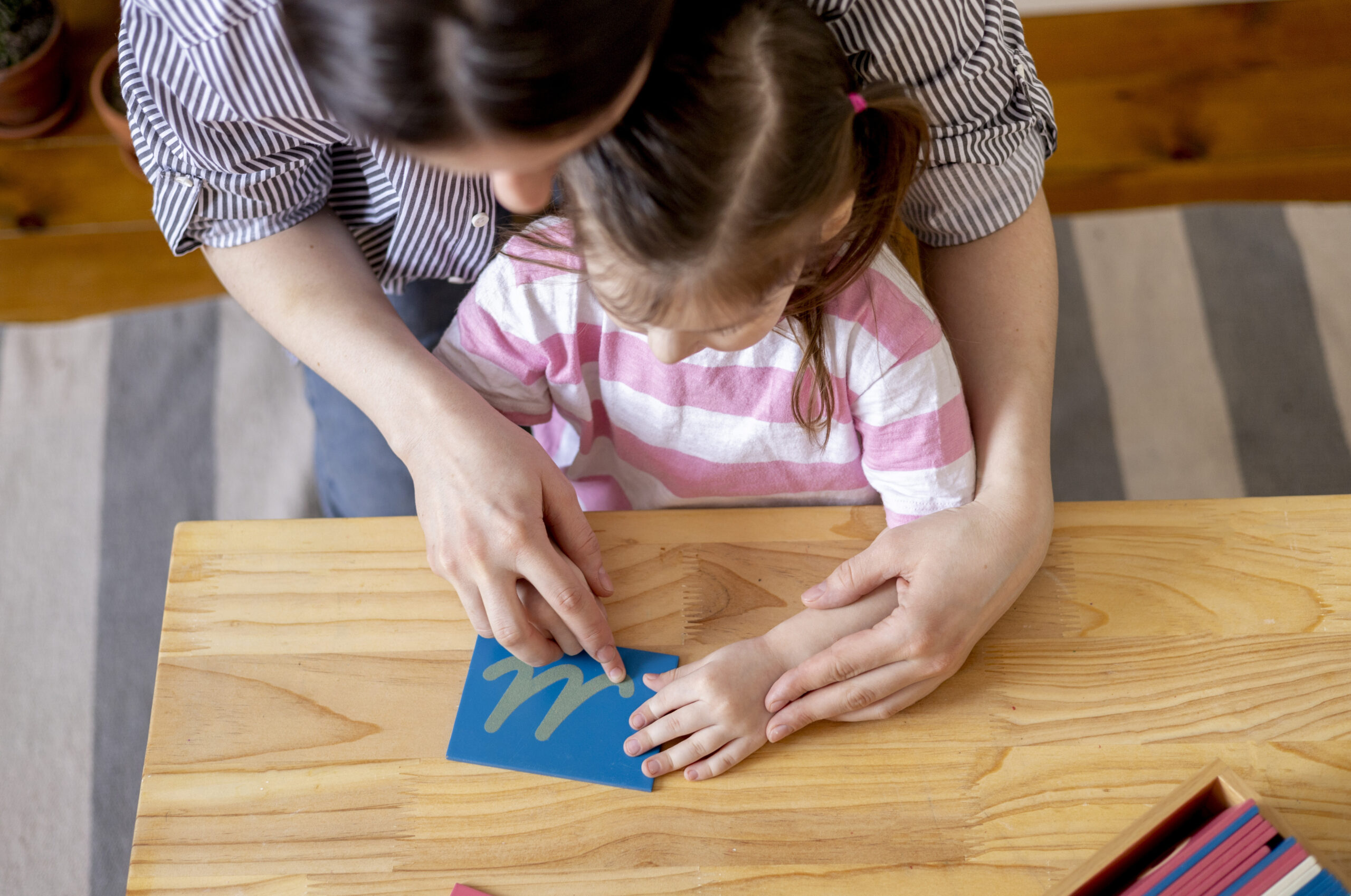
Overview of the areas of development Montessori focuses on.
When researching the Montessori Method, many parents are often left asking what child developmental skills the Montessori method focuses on.
While every article about Montessori activities, play, and toys will mention some of these developmental skills, in most cases, we are only presented with parts of the puzzle and key phrases but not the whole picture; it is left to the parents to put together through countless hours of research.
The Montessori method, developed by Dr. Maria Montessori, is an educational approach that emphasizes the development of the whole child, be that physically, intellectually, emotionally and socially.
The Montessori method is based on the belief that children are curious and natural learners that are capable of initiating their own learning. While the parent’s responsibility is to set up a safe learning environment for their children to explore their environment creatively, and through the processes of exploration, they pick up these critical developmental skills.
Here are some of the critical areas of development that the Montessori method focuses on:
Motor Skills Development:
- Gross Motor Skills: Activities such as walking, running, jumping, and other physical movements that involve large muscle groups.
- Fine Motor Skills: Activities that involve the coordination of small muscles, such as those used in grasping, writing, and manipulating small objects.
Cognitive Development:
- Sensory Exploration: Activities that engage the senses (sight, sound, touch, taste, and smell) to help children understand and explore their environment.
- Mathematics: Hands-on activities that introduce mathematical concepts and operations in a concrete, tangible way.
- Language: Activities that promote language development, including spoken language, vocabulary expansion, and written language skills.
Social and Emotional Development:
- Grace and Courtesy: Lessons on social manners, respect, and consideration for others.
- Conflict Resolution: Encourages children to solve problems and conflicts independently and civilly, fostering emotional intelligence.
- Independence: Activities that promote self-help skills, allowing children to become more independent in their daily lives.
Practical Life Skills:
- Daily Living Activities: Tasks that help children develop practical skills for daily living, such as pouring, sweeping, dressing, and cleaning.
- Care of the Environment: Encourages responsibility towards the environment and caring for the surroundings.
Cultural and Science Education:
- Geography and Cultural Studies: Introduces children to the world around them, including different cultures, countries, and customs.
- Botany and Zoology: Exploration of the natural world through activities related to animals and plants.
Creativity and Arts:
- Art and Music: Provides opportunities for creative expression through activities like drawing, painting, and playing musical instruments.
Critical Thinking and Problem-Solving:
- Practical Problem-Solving: Children are encouraged to think critically and solve real-life problems through hands-on activities.
The Montessori approach to learning is comprehensive and develops all areas of your child’s skills. Activities can be open-ended and enhance your child’s natural curiosity without putting them under the pressure of having to come up with the correct way or right answer. Montessori activities are about flexibility, creativity and learning through progress rather than a rigid pass-or-fail approach.